
The History of Bonfire Night in the UK
Every year on 5 November, the skies above Britain are set alight with fireworks, bonfires crackle across the countryside, and the old rhyme echoes through the cold autumn air: “Remember, remember the fifth of November, gunpowder, treason and plot.”
But why do we still celebrate a failed assassination attempt from over 400 years ago? The answer lies in a fascinating blend of religious conflict, political propaganda, and a uniquely British sense of tradition.
The Reformation and the Gunpowder Plot
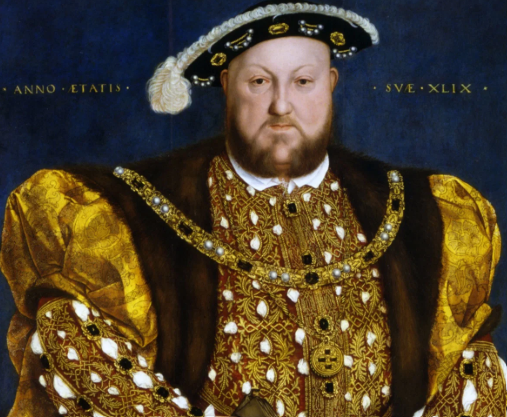
The story begins with the English Reformation. When Henry VIII broke from Rome in the 1530s, England became a Protestant nation. For decades that followed, Catholics and Protestants alternated between persecution and power, depending on who sat on the throne. By the time James I—a Protestant—ascended to the English crown in 1603, many Catholics had hoped for greater tolerance. When that tolerance failed to materialise, a group of conspirators decided on a radical solution.
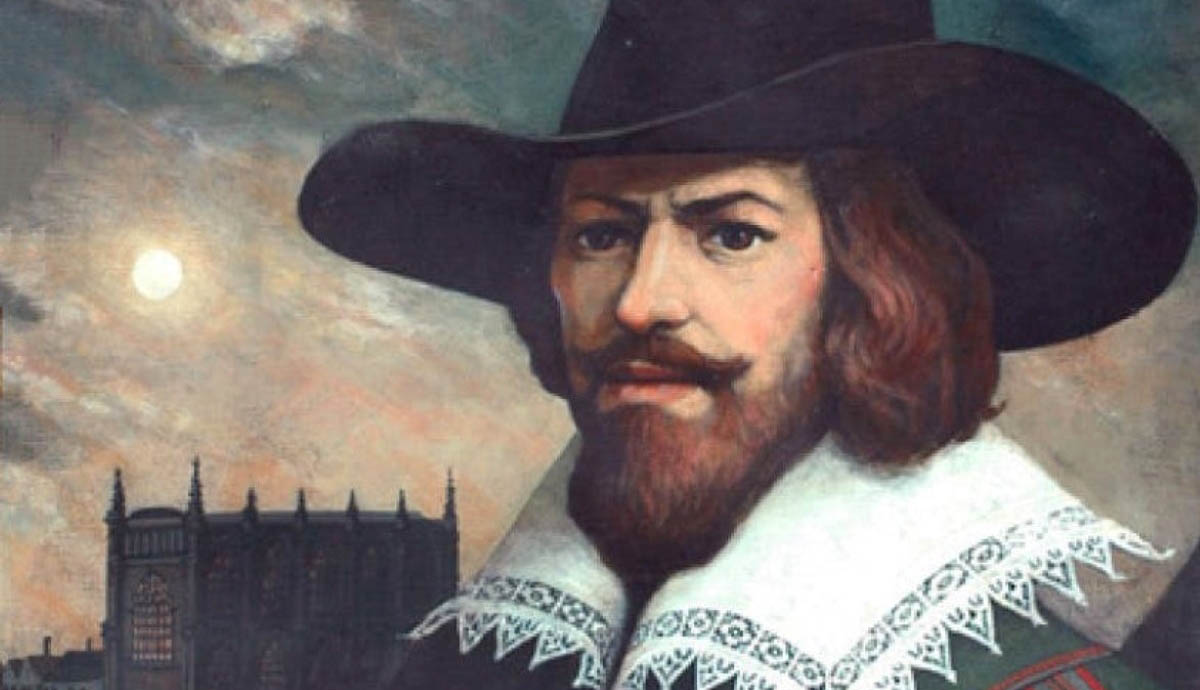
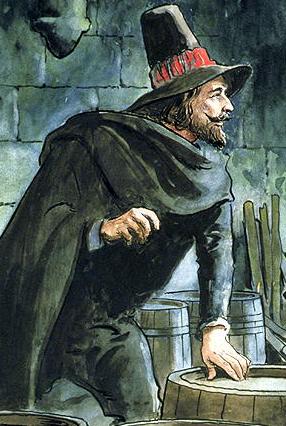
Their plan was nothing short of dastardly: blow up the Houses of Parliament during the State Opening on 5 November 1605, killing King James I and much of the Protestant aristocracy in one devastating stroke. The conspirators smuggled 36 barrels of gunpowder into a cellar beneath the House of Lords and assigned Guy Fawkes—a Catholic convert with military experience—to guard the explosives and light the fuse.
The plot was foiled in the early hours of 5 November when a search party discovered Fawkes in the cellar with the gunpowder. He was arrested, tortured, and eventually executed along with his co-conspirators.
A Nation Celebrates
The response was immediate. That very evening, Londoners lit bonfires in the streets to celebrate the King’s survival. The following year, Parliament passed the Observance of 5th November Act, making the date an annual day of thanksgiving. What began as a religious and political commemoration quickly became something more.
Over the centuries, Bonfire Night evolved. In the 17th century, effigies of the Pope were burned alongside Guy Fawkes. By the 18th century, Fawkes himself had become the central figure—the “guy” that children would wheel through the streets asking for “a penny for the guy”. Fireworks, banned at various points for safety reasons, became a fixture by the Victorian era.
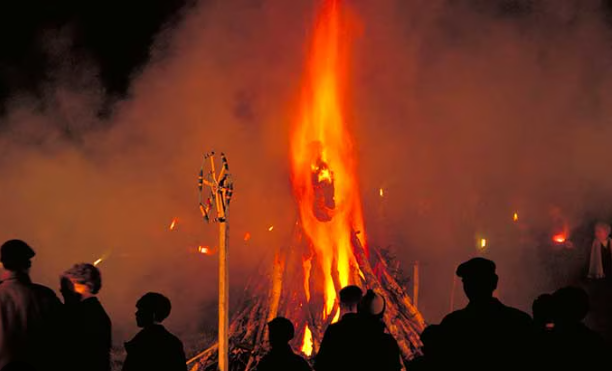
What is striking about Bonfire Night is how it has survived despite losing its original sectarian bite. The anti-Catholic fervour that once fuelled the celebrations has faded, replaced by a shared cultural ritual that brings communities together around fire, food, and spectacle. It is, in many ways, a very British paradox: a festival born of religious hatred that has become a beloved national tradition enjoyed by people of all faiths and none.
Celebrating in 2026: Woolacombe Bonfire Night
For those wanting to experience Bonfire Night at its most atmospheric, Woolacombe in North Devon offers one of the finest celebrations in the South West. Woolacombe Firework Night 2026 will take place on Thursday 5th November on Woolacombe Meadow.
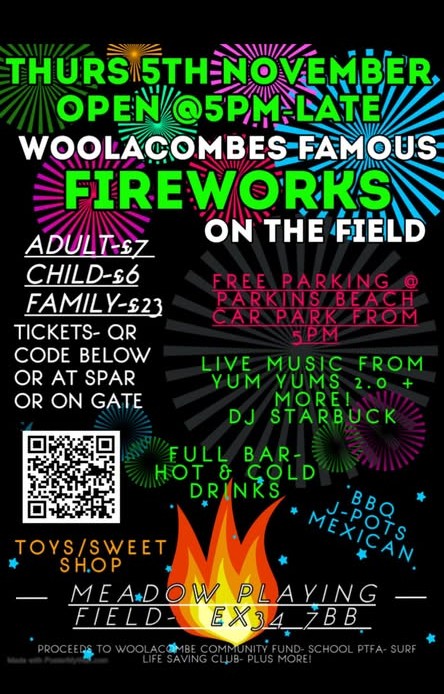
The evening promises everything you would expect from a proper Bonfire Night: a blazing bonfire, a spectacular firework display, live music from Yum Yums 2.0, a DJ set from DJ Starbuck, and plenty of hot food and drink to keep the November chill at bay. Tickets are available online, from the local Spar, or on the gate—adults £7, children £6, and a family ticket for £23.
Where to Stay: Southover Beach Apartments

To make the most of the occasion, why not turn it into a short break? Southover Beach Apartments in Woolacombe offers the perfect base for a Bonfire Night getaway. These five-star self-catering apartments sit right on the beachfront, with panoramic views of Woolacombe Bay from private balconies and patios.

The accommodation is stylish and well-equipped, with fully kitted kitchens, comfortable living spaces, and secure surf storage for those wanting to make the most of North Devon’s famous waves. The apartments are also dog-friendly, making them ideal for the whole family—including the four-legged members.
After a night of fireworks and bonfires, there is nothing quite like waking up to the sound of the sea and a brisk autumn walk along Woolacombe’s award-winning beach. Bonfire Night 2026 may still be months away, but it is never too early to plan a memorable November escape to the Devon coast.